

Press Release
Korea Deep Learning to unveil semantic OCR with semantic chunking in 2026
Korea Deep LearningPublished

Korea Deep Learning will unveil, within 2026, a "semantic OCR" that uses semantic chunking, which groups and processes documents in units of meaning. In an interview with AI Times published on February 15, 2026, Kim Dong-hyun, CSO (Chief Strategy Officer) of Korea Deep Learning, set out the goal of creating a next-generation optical character recognition (OCR) that minimizes errors and, within 2026, building an OCR that runs on company-wide data.
"After becoming the first in Korea to combine a vision-language model (VLM) with optical character recognition (OCR), we will now introduce 'semantic chunking' to unveil a 'semantic OCR' that minimizes errors."
— Kim Dong-hyun, CSO, Korea Deep Learning
How semantic chunking reduces OCR errors
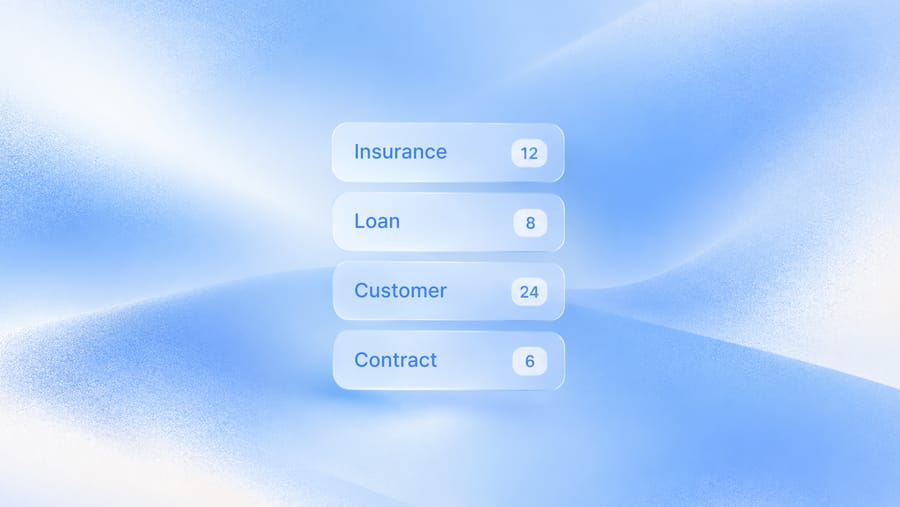
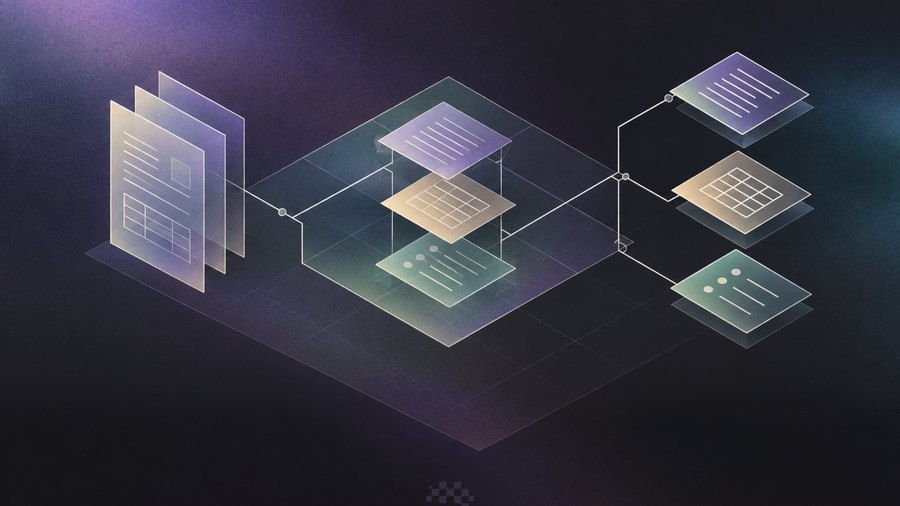
Semantic chunking is a technology that groups and processes documents in units of meaning rather than by character or line. When information that belongs together, such as the items and values in a table or a clause and its content, is handled as one block, the extraction results keep the original meaning of the document. It is also the stage that decides search quality when documents are fed to retrieval-augmented generation (RAG) or large language models (LLMs).
Kim explained that bringing AI into real work above all requires eliminating errors, and that to do so, review automation should come first so that AI can recognize on its own when it is wrong. Semantic chunking that takes the meaning of text into account is the key, Kim said, and drawing accurate evidence out of AI requires building company-wide data in the form of a "knowledge graph."
From a single document to a knowledge graph of company-wide data
A knowledge graph goes beyond seeing meaning only within a single document and makes it possible to grasp the relationships between files too. "Turning data into a knowledge graph lets you look into much finer detail," Kim said. "Rather than looking at meaning only within one document, you can grasp the relationships between files, which makes more accurate information retrieval possible." As the reason this approach has not been adopted in industry until now, Kim pointed out that turning company-wide data into a graph is very difficult and takes a lot of resources.
Adopting VLMs first changed the range of documents that can be covered. A single team at a business handles up to 50 types of documents, but before VLMs, OCR could be applied to only about 7 or 8 specific types. Because VLM OCR can read most documents with minimal data, it can now be applied to almost all document data. Korea Deep Learning was the first to turn this approach into a product, launching DEEP OCR+, Korea's first VLM-based OCR solution, in April 2025.
End to end, from document recognition to deployment in the field
Kim stressed that recognizing the text in documents is no longer enough. Korea Deep Learning aims for an end-to-end solution that helps AI recognize document data and put it to use in real work right away. To that end, forward deployed engineers (FDEs) visit customers in person and provide consulting from the data-building stage. Many companies in Korea do not have a chief data officer (CDO), so this team is a big help in building AI training data, Kim explained.
"Because we were the first in the industry to start VLM OCR, we have a good grasp of the real 'demand points' in the field, which works in our favor as we expand the business," Kim said. "For any business thinking about adopting AI, the fastest way to start is VLM OCR."
A lightweight pipeline that balances cost and performance
Using only a VLM has a limitation: infrastructure costs go up. Korea Deep Learning chose to combine the processing of its OCR model and its VLM OCR model to secure performance while reducing the amount of computation, and also built a semi-automated pipeline that finds the optimal model size through lightweighting and quantization. Built on its own VLM trained on 400 million text and image documents, the deployment period for an on-premises setup is about one to two weeks, excluding system integration.
Korea Deep Learning closed a KRW 12 billion Series A in January 2026, and is expanding its infrastructure with B200-based DGX servers and hiring more developers. Kim added that since VLMs also count as generative AI, the company is taking care to meet legal requirements such as watermarking. DEEP Agent, launched in March 2025, is scheduled to launch as SaaS by March 2026.
About DEEP OCR
Korea Deep Learning started out by reading documents. Built on KDL's own document-specialized VLM, DEEP OCR is Korea's first VLM-based OCR solution, reading not just the characters but the structure and meaning of a document together. It handles unstructured documents in every kind of layout without building separate training data, and extracts text and key-value data from visual elements such as seals, signatures, tables, numbers and symbols. From loan documents in finance to administrative documents in the public sector and handwritten waybills in logistics, documents people used to copy out by hand become business data through DEEP OCR. More information is available on the DEEP OCR page at koreadeep.com.
About Korea Deep Learning
Korea Deep Learning (KDL), founded in 2019, is an enterprise AI agent company. Built on KDL Frontier, its own vision-language model (VLM) specialized for documents, KDL makes AI agents that take on and complete the document work of businesses and public institutions. Its main products are DEEP OCR, DEEP Parser, DEEP Agent and DEEP Ops.