

Press Release
Korea Deep Learning unveils logistics OCR technology that automates the sorting of handwritten waybills
Korea Deep LearningPublished
On December 20, 2023, Korea Deep Learning unveiled its deep learning-based, next-generation logistics data OCR DX technology. The technology uses optical character recognition (OCR) to turn logistics documents that machines find hard to read, such as handwritten waybills and invoices in widely varying formats, into data, and carries that data through to automated sorting. The aim is to speed up digital transformation (DX) in logistics.
A flood of hard-to-read documents in logistics
Logistics operations are flooded with documents that machines find hard to read. Handwritten waybills, invoice formats that differ from company to company, and blurry scans are typical examples. If the delivery information on a waybill cannot be read correctly, the parcel drops out of the automated sorting line and has to be checked again by a person. The heavier the volume on a given day, the more this manual work piles up and the heavier the load on workers.
Logistics OCR that turns unstructured documents into delivery data
Korea Deep Learning's logistics OCR reads these unstructured documents, turns the delivery information into data, and carries that data through to automated sorting. The goal is to go beyond recognizing characters and organize the information on a waybill into the fields needed for delivery, so downstream systems can use it right away.
The technology has its roots in the deep learning waybill recognition system Korea Deep Learning built for Korea Post in 2019, its first year in business. Since then, the company has developed the technology further into DEEP OCR, a character recognition solution built on its own deep learning engine.
Proven through Korea Post and Sunghwa Corporate Express projects
Korea Deep Learning has proven this technology through Korea Post's high-speed logistics OCR system and Sunghwa Corporate Express's handwritten waybill digitization project. Together with Sunghwa Corporate Express, it was selected in 2022 for the National IT Industry Promotion Agency's AI Voucher Support Program and set out to develop a "high-speed deep learning waybill recognition system for digitizing handwritten waybills." Sunghwa Corporate Express is a business parcel delivery company with a network of about 70 logistics sites across Korea, and it held more than 100,000 handwritten waybill records.
In January 2023, the project led to Korea Deep Learning being named an outstanding supplier in the 2022 AI Voucher Support Program. The parcel waybill image recognition system it built was expected to reduce parcel missorting and save the client company KRW 450 million a year in labor costs.
Korea Deep Learning said it will keep advancing the technology it has proven in this way to support the digital transformation of the logistics industry.
About DEEP OCR
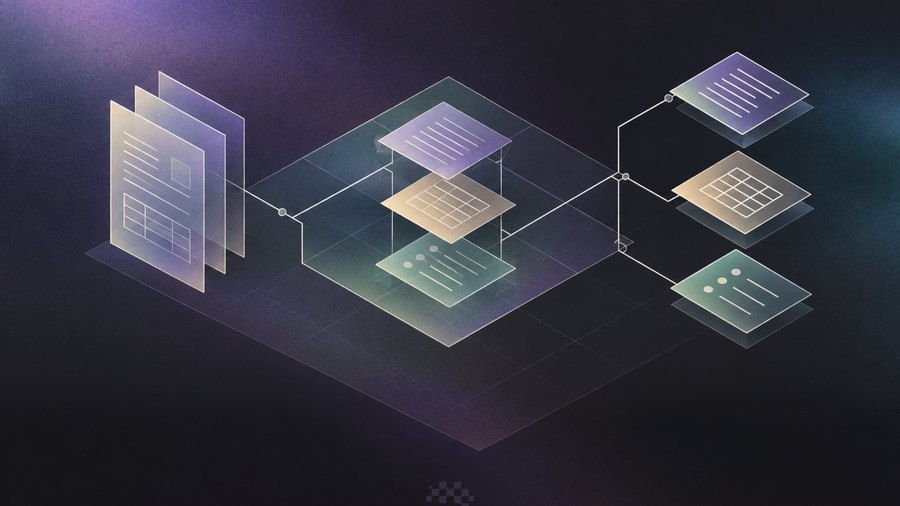
Korea Deep Learning started out by reading documents. Built on KDL's own document-specialized VLM, DEEP OCR is Korea's first VLM-based OCR solution, reading not just the characters but the structure and meaning of a document together. It handles unstructured documents in every kind of layout without building separate training data, and extracts text and key-value data from visual elements such as seals, signatures, tables, numbers and symbols. From loan documents in finance to administrative documents in the public sector and handwritten waybills in logistics, documents people used to copy out by hand become business data through DEEP OCR. More information is available on the DEEP OCR page at koreadeep.com.
About Korea Deep Learning
Korea Deep Learning (KDL), founded in 2019, is an enterprise AI agent company. Built on KDL Frontier, its own vision-language model (VLM) specialized for documents, KDL makes AI agents that take on and complete the document work of businesses and public institutions. Its main products are DEEP OCR, DEEP Parser, DEEP Agent and DEEP Ops.