

Interview
How Korea Deep Learning cut 30,000 hours of loan document entry to 1,000
Korea Deep LearningPublished

In a proof-of-concept (PoC) simulation, DEEP Agent, Korea Deep Learning's AI agent based on a vision-language model (VLM), cut the time a major Korean capital finance company spent entering loan documents from 30,000 hours a month to about 1,000 hours, a reduction of about 96%. In an interview with EBN, Kim Ji-hyun, CEO of Korea Deep Learning, said that AI proves its ability not through benchmark scores but through the time it saves the people doing the work, as it did here.
Review time over benchmark scores
Korea Deep Learning measures the performance of AI models by time in the field. When an AI agent takes over the repetitive work of people reading documents and copying them out, the staff can focus only on reviewing and judging the exceptions.
"Whether an artificial intelligence (AI) model's benchmark score is 99 or 95 does not matter in real work. What matters more than raising scores for a limited setting is how much review time it saves the people doing the work."
— Kim Ji-hyun, CEO, Korea Deep Learning
The words are a caution about scores, but Korea Deep Learning does not score poorly. On April 22, 2026, the day before the interview ran, KDL Frontier, Korea Deep Learning's document-specialized VLM, ranked first in the English category of OCRBench v2, a global multimodal OCR benchmark, with an overall score of 68.1. It led Google's Gemini 3 Pro Preview, in second place, by 4.7 points, and scored higher than GPT-5 as well. A company that wins on scores, too, chose to talk about time before scores.
Curbing hallucination so no one has to check again
Where earlier OCR found information based on the position of the text, DEEP Agent analyzes a document's structure, its context and the relationships between pieces of information, so it finds the values it needs even when the format changes. In financial and public documents, where misreading an amount or personal information is not acceptable, minimizing hallucination is at the heart of competitiveness, the company explained.
Korea Deep Learning said that by curbing hallucination through its document-specialized VLM, it removed the hassle of staff having to review every field again.
Korea Deep Learning reduced hallucination by designing its model to extract the values written in a document as faithfully as possible, and calls this "near-zero hallucination." It also optimized the model to read reliably even from noisy input such as Korean handwriting. If people cannot trust the AI's results and have to check everything again from the start, the time saved by automation goes straight back into review. That is why reducing hallucination means protecting time. The article also introduced a case in which AI instantly extracts and enters the data from applications for voice phishing victim relief.
Proving it in the field with a single laptop
According to Korea Deep Learning, more than half of its customers came to it after failing to adopt other OCR. Many had wrestled with the problem for nearly two years and had even been told it was technically impossible to process.
"When we visit a site with just one laptop and decode on the spot the documents they were told could not be processed, the staff are amazed."
— Kim Ji-hyun, CEO, Korea Deep Learning
The ability to read a document it has never seen, right then and there, carries into the product strategy. DEEP Agent is deployed in the field within two weeks on average, with no separate training process. Customers do not have to wait months while they collect data and label it.
KRW 10 billion built without investment
Korea Deep Learning has recorded KRW 10 billion in cumulative revenue over five years, and has deployed its solutions in more than 80 public and business environments, including the Gyeonggi Provincial Government and Busan Metropolitan City. Apart from KRW 100 million in TIPS funding after its founding, it built these numbers from its own revenue, without outside investment. Korea Development Bank (KDB) put KRW 5 billion into the company's first large investment round, a Series A worth KRW 12 billion. Korea Deep Learning has set a goal of passing KRW 10 billion in revenue in a single year in 2026.
A partner sales network and a global roadmap
Its growth strategy is shifting from word of mouth about its technology to a partner ecosystem. The roadmap runs in this order: stabilizing the handling of exception data such as poor handwriting and cursive, expanding to the analysis of complex visual information such as design drawings, entering the United States, Japan and Singapore, and setting a global standard for document parsing. On a stock market listing targeted for 2027, the company said it would decide flexibly, watching valuation and market conditions.
Korea Deep Learning said that while it had won customers through word of mouth about its technology, from 2026 it would recruit strategic partners on a large scale and build a sales network to raise its market share. It added that, as with electronic approval or ChatGPT when they were first introduced, it wants to remain a company that builds an essential technology ecosystem, one where staff someday ask how they ever worked without Korea Deep Learning's solutions.
The full interview was published in EBN.
About DEEP Agent
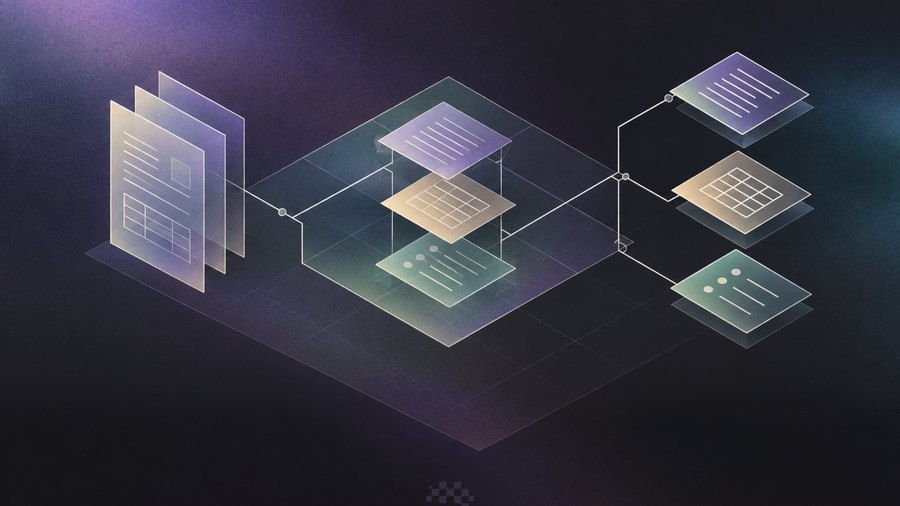
Korea Deep Learning makes AI that does not stop at reading documents. DEEP Agent is a document-based AI agent that interprets a document's visual structure and linguistic meaning together to extract the key information, then carries out the whole of the document work, from classification and verification to the hand-off into business systems. Upload a contract and it summarizes the key clauses, flags the risky ones and goes on to register it in the ERP, and it reaches the field in two weeks on average with no separate training. It holds GS Certification Grade 1, Korea's national software quality certification, and is designated for priority purchase by public institutions. More information is available on the DEEP Agent page at koreadeep.com.
About Korea Deep Learning
Korea Deep Learning (KDL), founded in 2019, is an enterprise AI agent company. Built on KDL Frontier, its own vision-language model (VLM) specialized for documents, KDL makes AI agents that take on and complete the document work of businesses and public institutions. Its main products are DEEP OCR, DEEP Parser, DEEP Agent and DEEP Ops.