

Interview
Korea Deep Learning aims for KRW 10 billion in revenue with AI used every day in the field, not in demos
Korea Deep LearningPublished
In an AI Insight interview with Aju Business Daily published on August 8, 2025, Kim Ji-hyun, CEO of Korea Deep Learning, set a 2025 revenue target of more than KRW 10 billion. At the center of the interview was "AI that is actually used." Korea Deep Learning's way, Kim said, is to build revenue not with flashy demos but with document automation that runs every day in finance, the public sector, manufacturing and healthcare.
AI that understands and processes documents
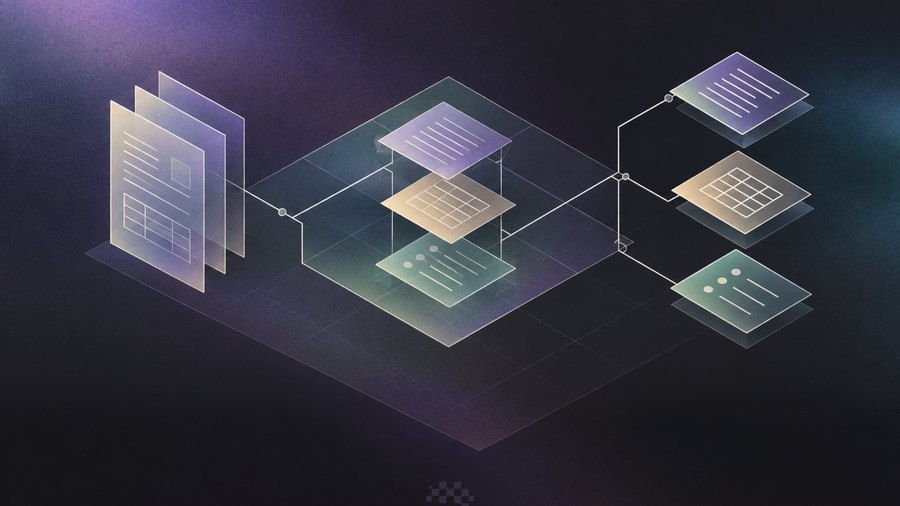
Korea Deep Learning supplies solutions that process unstructured documents such as contracts, invoices and reports to the finance, public, manufacturing and healthcare sectors, and is preparing to expand globally with SaaS. Its flagship product, DEEP Agent, is a document-based AI agent that interprets a document's visual structure and linguistic meaning together to extract information and carry out the follow-up action. Korea Deep Learning said the average deployment period is under two weeks and accuracy is at the level of 97 to 99%.
"One strength in particular is that it is 'Non-Training AI' that works without separate training."
— Kim Ji-hyun, CEO, Korea Deep Learning
Launched in March 2025, DEEP Agent takes an uploaded contract, summarizes its key clauses, flags risky clauses and carries the work through to registration in an enterprise resource planning (ERP) system. According to Korea Deep Learning, customers' deployment costs fell from an initial KRW 300 million to KRW 150 million, and build time from 66 days to 10 days. The fact that no separate training is needed is what produced these numbers.
Workplaces that use OCR and still retype everything
Founded in 2019, Korea Deep Learning reached its sixth year in 2025. The company was started because of a scene Kim saw in businesses.
"I was really shocked to see people reviewing and entering everything again by hand, even though the companies were already using OCR."
— Kim Ji-hyun, CEO, Korea Deep Learning
Conventional optical character recognition (OCR) is mostly optimized for standardized forms, so the more varied the document formats, the lower its recognition accuracy. This is the limit Korea Deep Learning pointed out in an interview with ZDNet Korea in February 2025. In May 2025, Korea Deep Learning announced that it had won an AI OCR automation contract covering 46 types of unstructured loan documents for a large Korean financial company. The target was a process in which people classified and entered documents received as a single PDF by hand, and this project is Hyundai Capital's company-wide document work automation project.
The real-world uses Korea Deep Learning cited include extracting diagnoses, treatment dates and costs from insurance claims, connecting them to robotic process automation (RPA) and flagging missing fields, and finding unfair terms such as penalty clauses in contracts. It said these technologies are already in use in the real world, and that more and more people will come to feel the change naturally.
People who actually solve problems
Korea Deep Learning's idea of the right person puts more weight on the ability to define and solve problems than on technical skill. Korea Deep Learning is an organization specialized in document AI that handles everything itself, from the first meeting to analyzing the customer's problem and API integration. Technical skill is a given, but in the end the core is the ability to define, interpret and solve problems, and Korea Deep Learning values most highly "people who actually solve problems."
How to reach KRW 10 billion
As its business plan, Korea Deep Learning said it is aiming for more than KRW 10 billion in revenue in 2025, while preparing to enter the global SaaS market and to list on KOSDAQ. Over the medium term, its roadmap is to strengthen a SaaS-centered recurring revenue structure and secure a global customer base to generate annual revenue of KRW 30 billion to 40 billion or more. An API-integrated subscription model is the main axis of growth.
Korea Deep Learning said a growing number of customers have recently been skipping the proof of concept (PoC) and going straight to deployment in their work. It added its view that the shift from AI that reads documents to AI that understands and acts on them will soon change the whole way companies work.
The full interview was published in Aju Business Daily.
About DEEP Agent
Korea Deep Learning makes AI that does not stop at reading documents. DEEP Agent is a document-based AI agent that interprets a document's visual structure and linguistic meaning together to extract the key information, then carries out the whole of the document work, from classification and verification to the hand-off into business systems. Upload a contract and it summarizes the key clauses, flags the risky ones and goes on to register it in the ERP, and it reaches the field in two weeks on average with no separate training. It holds GS Certification Grade 1, Korea's national software quality certification, and is designated for priority purchase by public institutions. More information is available on the DEEP Agent page at koreadeep.com.
About Korea Deep Learning
Korea Deep Learning (KDL), founded in 2019, is an enterprise AI agent company. Built on KDL Frontier, its own vision-language model (VLM) specialized for documents, KDL makes AI agents that take on and complete the document work of businesses and public institutions. Its main products are DEEP OCR, DEEP Parser, DEEP Agent and DEEP Ops.