

Interview
Korea Deep Learning explains how it builds OCR in two weeks
Korea Deep LearningPublished
In an interview with AI Times published on April 26, 2025, Kim Ji-hyun, CEO of Korea Deep Learning, said the company trains its vision-language model (VLM) on more than 400 million pages of data collected over five years and completes enterprise optical character recognition (OCR) deployments within about two weeks. Korea Deep Learning has been consistently profitable since its founding in 2019, and cumulative revenue from its OCR business passed KRW 10 billion in 2024.
Why it chose OCR as the AI that delivers results fastest
Korea Deep Learning serves businesses (B2B) and the government and public sector (B2G). It put OCR at the center of its business because it saw it as the AI technology that delivers results fastest. "The process of adopting AI is never easy for a company," Korea Deep Learning explained. "OCR is the AI technology that reliably cuts labor costs and visibly improves cost efficiency."
"We thought the artificial intelligence (AI) technology that could deliver results fastest was optical character recognition (OCR)."
— Kim Ji-hyun, CEO, Korea Deep Learning
Korea Deep Learning's OCR business started in logistics. In 2019, its first year, it built a deep learning waybill recognition system for Korea Post, and in December 2024 its cumulative revenue passed KRW 10 billion.
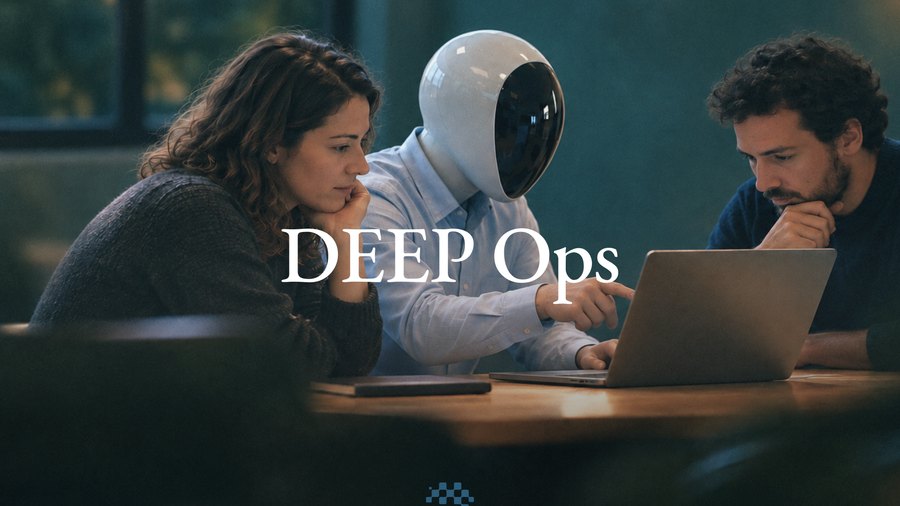
Two weeks, made possible by four technical PMs and a prebuilt line
The time Korea Deep Learning cited for building enterprise OCR is about two weeks, or around 10 days. Two mechanisms make that speed possible. One is a structure that assigns four dedicated technical PMs, and the other is a preparation system called the prebuilt line. The prebuilt line takes about 10 days.
Korea Deep Learning's position is that technical PMs must not stop at communicating with clients but must know the technology inside and out.
"A technical PM must not only communicate with the client but fully understand the technology"
— Kim Ji-hyun, CEO, Korea Deep Learning
With the Data Ops system it has developed over about five years, Korea Deep Learning has cut the time spent on data-related work by more than 90%.
From 10 minutes to one minute per document, saving KRW 1.7 billion a year
The impact of adoption shows in the numbers. One company that processed about 40 types of documents a day cut its processing time per document from 10 minutes to one minute after adopting Korea Deep Learning's OCR, and saved KRW 1.7 billion a year. "Most of Korea's major IT companies use Korea Deep Learning's OCR technology," Korea Deep Learning said.
The company is currently running proofs of concept (PoCs) with three large logistics and IT companies. Around the same time, Korea Deep Learning launched DEEP Agent in March 2025 and DEEP OCR+, its VLM-based OCR solution, on April 10, 2025.
The next step of combining VLM with LLM, and its goals for 2025
Korea Deep Learning said it plans to officially unveil technology that combines its VLM-based OCR with a large language model (LLM) in April or May 2025. It also said 2025 is a turning point and the most important period for the company, and that it expects to post its best results. It also plans to open an investment round.
The full interview was published in AI Times.
About DEEP OCR
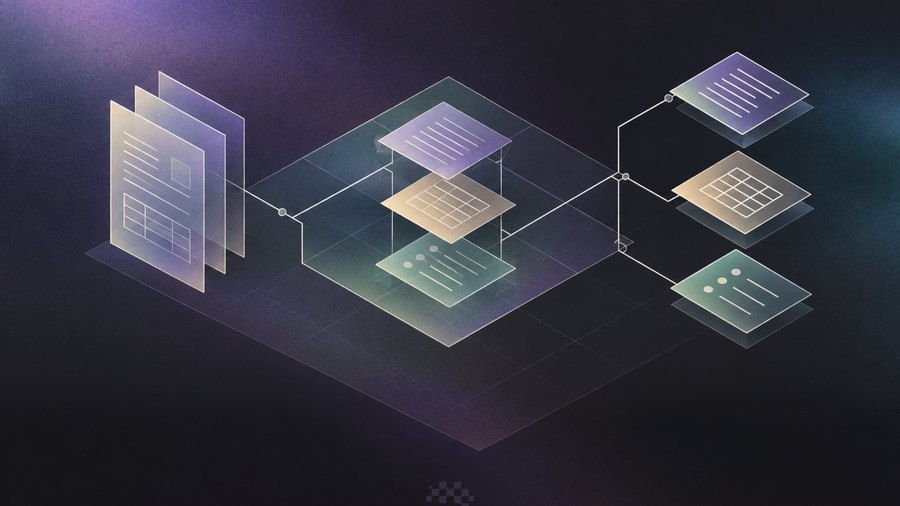
Korea Deep Learning started out by reading documents. Built on KDL's own document-specialized VLM, DEEP OCR is Korea's first VLM-based OCR solution, reading not just the characters but the structure and meaning of a document together. It handles unstructured documents in every kind of layout without building separate training data, and extracts text and key-value data from visual elements such as seals, signatures, tables, numbers and symbols. From loan documents in finance to administrative documents in the public sector and handwritten waybills in logistics, documents people used to copy out by hand become business data through DEEP OCR. More information is available on the DEEP OCR page at koreadeep.com.
About Korea Deep Learning
Korea Deep Learning (KDL), founded in 2019, is an enterprise AI agent company. Built on KDL Frontier, its own vision-language model (VLM) specialized for documents, KDL makes AI agents that take on and complete the document work of businesses and public institutions. Its main products are DEEP OCR, DEEP Parser, DEEP Agent and DEEP Ops.