

Interview
Korea Deep Learning in talks on about 50 contracts three months after launching DEEP OCR+
Korea Deep LearningPublished
In an AI Times interview published on July 12, 2025, Kim Ji-hyun, CEO of Korea Deep Learning, said that contract talks for DEEP OCR+, the vision-language model (VLM)-based optical character recognition (OCR) solution launched in April 2025, had reached about 50 in just over three months after launch. Its ability to read documents with no fixed format, without extra training, drew inquiries from finance, logistics and manufacturing, the company explained.
DEEP OCR+ extracts fields even without a fixed format
DEEP OCR+ is built on a model that Korea Deep Learning pretrained on more than 400 million text-image documents. It can process many types of documents without separate data collection or labeling. When Korea Deep Learning launched the product on April 10, 2025, it put the average adoption period at around two weeks.
"DEEP OCR+ is a solution that accurately understands the meaning of a document and automatically extracts its fields, even without a fixed format," Korea Deep Learning emphasized.
Handwritten work records that confused 6 and b
The company also shared a case from the field. The quality control team at a large company had been reviewing handwritten work records from the shop floor by hand, and the records were so unreliable that the number 6 and the letter b were confused. The answer from consulting it received from another vendor was that additional data training was essential.
After adopting Korea Deep Learning, the team kept additional training to a minimum and cut both cost and time significantly.
One-on-one consultations with dedicated consultants, with about 50 near contract
Korea Deep Learning assigns dedicated consultants who consult one-on-one with customers. About 50 contracts are under discussion, and more than 50 consultations are effectively at the stage just before a contract. Korea Deep Learning believes that offering solutions fitted to each customer's convenience, along with performance, is drawing a positive response.
Rising inquiries from finance, logistics and manufacturing
"Because VLM OCR can solve companies' main problems, such as inconsistent formats, merging and classifying documents, and wasted manual effort, all at once, inquiries are surging across many industries."
— Kim Ji-hyun, CEO, Korea Deep Learning
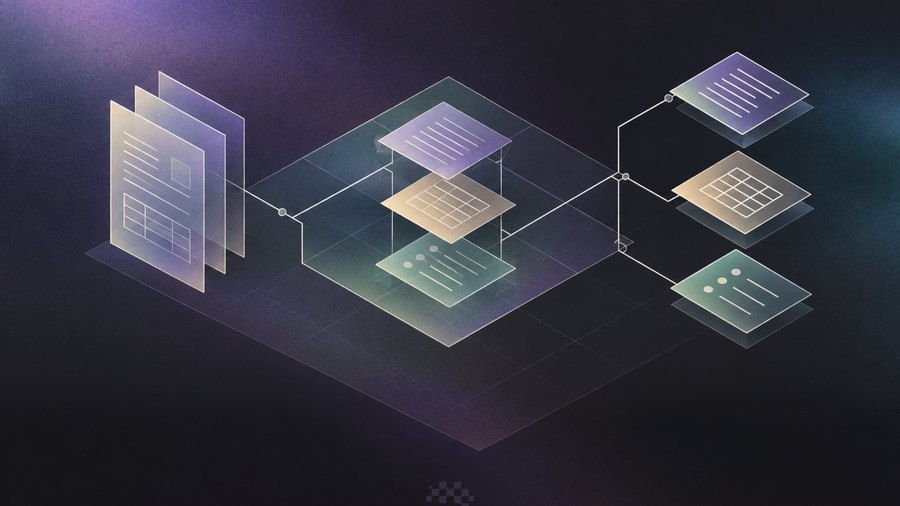
Demand differs by industry. In finance, the problem is processing unstructured civil documents such as certified copies of property registers and family relation certificates. In May 2025, Korea Deep Learning won a project with a major Korean financial company to automate the classification and entry of 46 types of unstructured loan documents with DEEP OCR+. In logistics, the targets are documents that mix multinational formats, such as invoices and customs documents from overseas vendors, and in manufacturing, supplier documents such as purchase orders, inspection reports and test certificates.
The full interview was published in AI Times.
About DEEP OCR
Korea Deep Learning started out by reading documents. Built on KDL's own document-specialized VLM, DEEP OCR is Korea's first VLM-based OCR solution, reading not just the characters but the structure and meaning of a document together. It handles unstructured documents in every kind of layout without building separate training data, and extracts text and key-value data from visual elements such as seals, signatures, tables, numbers and symbols. From loan documents in finance to administrative documents in the public sector and handwritten waybills in logistics, documents people used to copy out by hand become business data through DEEP OCR. More information is available on the DEEP OCR page at koreadeep.com.
About Korea Deep Learning
Korea Deep Learning (KDL), founded in 2019, is an enterprise AI agent company. Built on KDL Frontier, its own vision-language model (VLM) specialized for documents, KDL makes AI agents that take on and complete the document work of businesses and public institutions. Its main products are DEEP OCR, DEEP Parser, DEEP Agent and DEEP Ops.