

Press Release
Korea Deep Learning is making OCR that understands context the core of business automation
Korea Deep LearningPublished
In February 2025, Korea Deep Learning set out a technology direction of making OCR that understands a document's context and layout the core of business automation. In an interview with ZDNet Korea published on February 7, 2025, Korea Deep Learning stressed that the role of optical character recognition (OCR) grows as document digitization spreads, and that OCR must therefore be both accurate and secure.
"The growth potential of optical character recognition (OCR) is limitless, because document digitization will expand the role of OCR. We will make OCR the core of business automation, not simply a technology that recognizes documents."
— Kim Ji-hyun, CEO, Korea Deep Learning
Beyond extracting text, to a document's structure and context
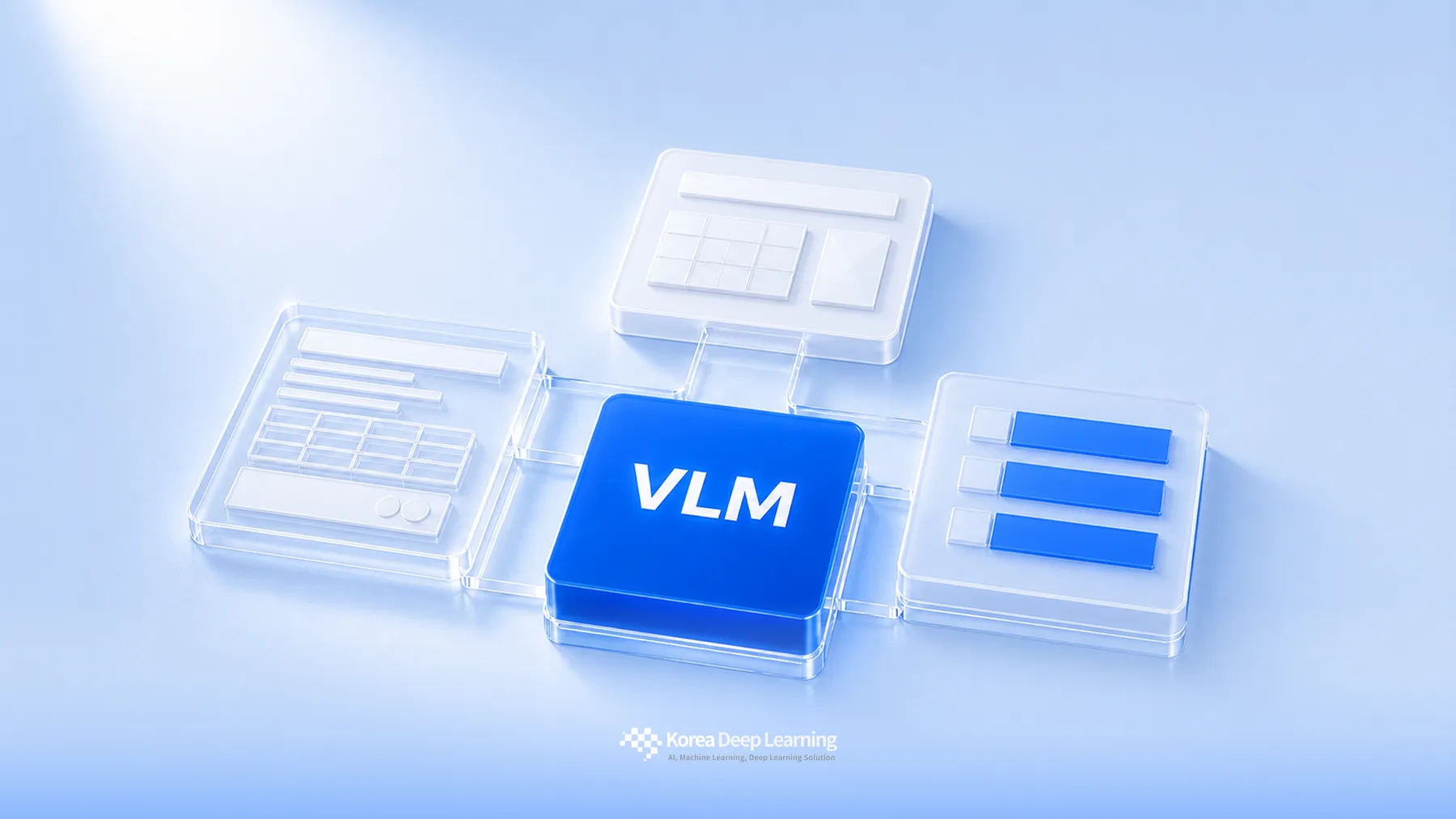
Where conventional OCR stopped at extracting the text in a document, the next step Korea Deep Learning envisions is AI that understands a document's structure and context together. Its view is that real business automation follows only when the AI can tell which value belongs to which field in unstructured documents that mix tables and forms.
Korea Deep Learning explained that OCR recognition accuracy drops as document forms grow more varied because OCR technology has mostly been optimized for standardized forms. The company offers custom OCR that reflects the characteristics of each task and project, and highlights as its strength extracting the information needed with the document's context and layout in mind. According to the company, it can analyze hundreds of thousands of documents in many different forms and organize the needed data consistently.
Accuracy, flexibility and security
Korea Deep Learning had been collecting text, image, video and voice data since before it was founded. On that basis, it offers a range of vision AI solutions, including OCR, object detection, video understanding and image generation. To develop and run models, it set up its own GPU servers and distributed processing system on premises, and cut costs with a highly efficient distributed training algorithm.
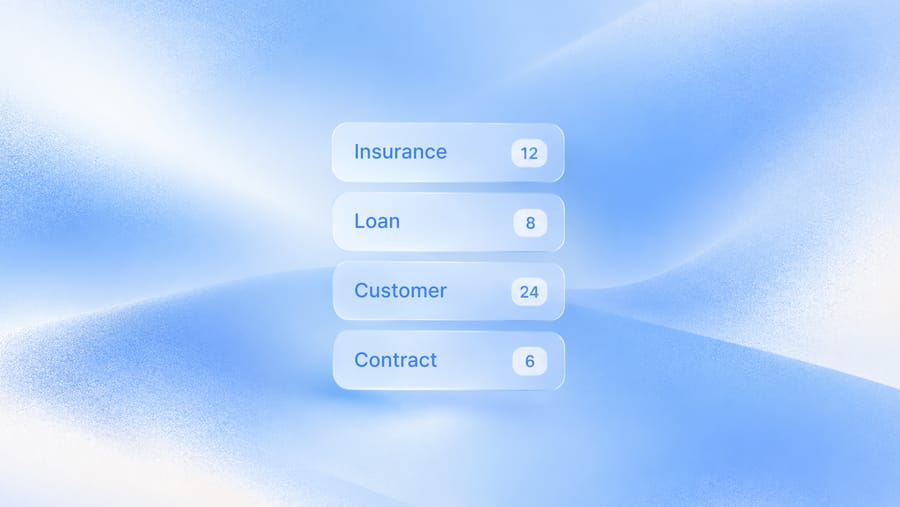
Korea Deep Learning named high accuracy, flexibility and security as the strengths of its OCR. Key-value extraction automatically finds fields (keys) on an application, such as name, date of birth and phone number, along with their values, and custom form conversion gives customers data in the shape they want right away. Korea Deep Learning explains that typical OCR recognizes only the text in a document, so extra work is needed to find the information required, while its OCR analyzes the document's structure and accurately extracts only the information needed, so customers can find the data they want quickly.
On security, the service is offered on premises, so document data is processed inside the company without leaving it, and private cloud and virtual private cloud (VPC) environments are also supported. This design is a principle carried over from DEEP OCR, the character recognition technology Korea Deep Learning released in 2021. DEEP OCR was built to run even on a company's closed internal network without an internet connection, so financial and public institutions that handle personal information can perform character recognition without sending data outside. Korea Deep Learning has 50 customers, including the National Tax Service, Shinhan Bank, and major Korean public corporations, public institutions and large companies.
2025 plans: OCR-based data collection and refinement, and overseas markets
In 2025, Korea Deep Learning will focus on OCR-based data collection and refinement. The goal is to digitize documents converted with OCR and then process them so they can be applied to chatbots or enterprise resource planning (ERP) systems. Korea Deep Learning expects that as large language model (LLM) technology advances, uses that link OCR with chatbots and agents will become possible, widening the room for its OCR business to grow.
In overseas markets, it plans to compete with image detection, segmentation and classification services instead of OCR, which faces language barriers. Korea Deep Learning currently provides an image analysis solution that detects cracks in roads and tunnels to a construction company in Indonesia. On February 6, 2025, it signed a memorandum of understanding (MOU) with Malaysian software company Hummingsoft to jointly develop a safety inspection solution that uses drones and AI to find cracks in building exteriors.
About DEEP OCR
Korea Deep Learning started out by reading documents. Built on KDL's own document-specialized VLM, DEEP OCR is Korea's first VLM-based OCR solution, reading not just the characters but the structure and meaning of a document together. It handles unstructured documents in every kind of layout without building separate training data, and extracts text and key-value data from visual elements such as seals, signatures, tables, numbers and symbols. From loan documents in finance to administrative documents in the public sector and handwritten waybills in logistics, documents people used to copy out by hand become business data through DEEP OCR. More information is available on the DEEP OCR page at koreadeep.com.
About Korea Deep Learning
Korea Deep Learning (KDL), founded in 2019, is an enterprise AI agent company. Built on KDL Frontier, its own vision-language model (VLM) specialized for documents, KDL makes AI agents that take on and complete the document work of businesses and public institutions. Its main products are DEEP OCR, DEEP Parser, DEEP Agent and DEEP Ops.