


Technology and architecture
What Is an sLLM: A Complete Guide to Small Language Models Installed Inside the Internal Network
Korea Deep LearningPublished
sLLM (small Large Language Model) is a term for a language model built with fewer parameters than the largest language models so that it can run on less computing resource. It is a term used mainly in Korea, where it often means a model installed inside an organization's internal network and fitted to a specific job.
Why the Term sLLM Is Used
Some organizations cannot call a large model from outside.
Most of the largest language models are offered through an external provider's API. Korean public bodies and financial companies often cannot send work documents outside because of network separation and internal rules. So the first question becomes whether the model can be installed inside the organization, and sLLM settled in as the word for a model of a size that can be.
The term also appears in Korean government documents. The AI-Semiconductor Initiative, released jointly by the relevant ministries in April 2024, cites sLLM as an example of lightweight, low-power AI, and sets as a task the development of model technology that keeps its performance even when the size of a very large AI model is cut to about 10%. There are also Korean public tenders with SLLM written into the project name.
In Korean requirement documents, sLLM usually comes with other conditions: that it runs with no connection to an external network, that it is installed on servers the organization owns, and that it can be adjusted with the organization's documents. The word sLLM is closer to a name that bundles these conditions together.
sLLM is an expression used mainly in Korea. In English-language papers the same thing is called an SLM (Small Language Model).
A Precise Definition of sLLM: How It Differs from an LLM
LLM and sLLM, Three Axes of Difference
First, the size differs. An sLLM is a model with fewer parameters than an LLM. But there is no agreed threshold for how few counts as small. The same model is called different things depending on the document and the time, so when a requirement says only "sLLM," you need to check what is actually being asked for.
Second, where it sits differs. A large model runs in the provider's cloud and users call it through an API. An sLLM is often discussed on the premise of an on-premise setup, installed and operated on the organization's servers. The smaller the model, the fewer accelerator resources it needs and the lighter the burden of internal installation.
Third, the use differs. Large models put forward their general ability to answer a wide range of questions. An sLLM is often adjusted to specific work and documents, and fine-tuning or a retrieval setup that attaches internal documents as grounds is discussed along with it.
Small does not always mean insufficient, and large does not always mean necessary. The narrower and clearer the scope of the work, the more often a small model is enough.
What to Check When sLLM Appears in a Requirement
Check the Conditions, Not the Size
Behind the word sLLM there are usually three conditions: that it can be installed in the internal network, that it can run on the equipment you have, and that it performs on your own work documents. Checking these conditions one by one helps an actual review more than the number of parameters does.
Check Where the Model Comes From and How It Is Updated
A model installed internally may be a public model that was brought in and adjusted, or one the vendor built itself. Either way, you need to check the license terms and the procedure for applying a new version when one comes out. With internal installation, a new version should be verified, approved and then applied, and it should be possible to roll back to the previous version if needed.
Verify with Real Documents
As a model gets smaller, the range it can handle may narrow too. That is why results verified with the organization's real documents and questions matter more than public benchmark scores. Also check whether it shows the source document with the answer, and whether it refrains from making up an answer when there is no source.
Turn Documents into a Form the Model Can Read
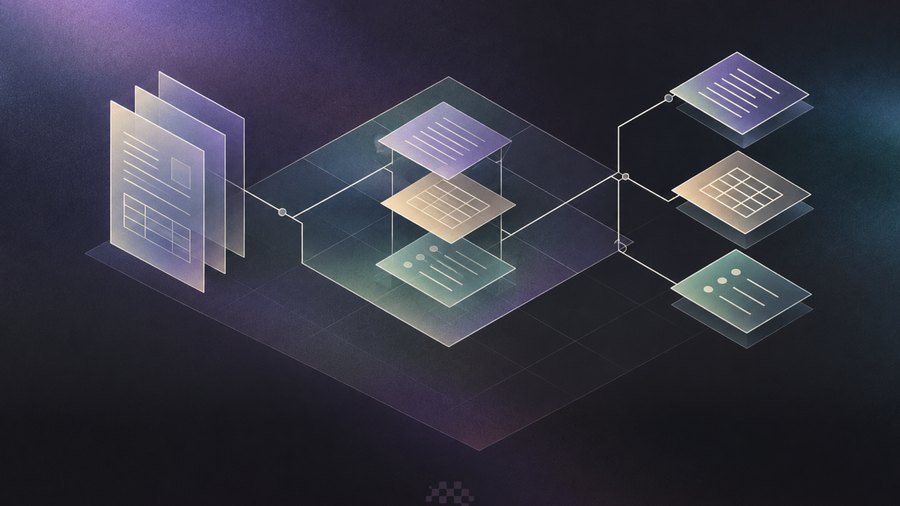
A language model takes text as input. If the work documents are scanned images or PDFs full of tables, the text, tables and document structure have to be extracted before they go into the model. If tables break or fields get mixed at this stage, the answer will be wrong however good the model is.
In a setup installed in the internal network, this preprocessing has to happen internally too. So when reading a requirement, check that everything from the step that reads the documents to the step that gives the answer finishes inside, not just the model.
Include Installation and Operation in the Scope
Installing and operating a model takes longer than choosing one. Accelerator specifications, the closed-network installation procedure, permissions and records, and incident response all have to be settled together. Korea Deep Learning's Enterprise AI Deployment page introduces four ways to deploy, including on-premise installation directly on your own servers.
Frequently asked questions
Are sLLM and SLM the same thing?
They refer to the same thing. The expression sLLM is used mainly in Korea, and SLM (Small Language Model) is used mainly in English-language papers.
How few parameters make a model an sLLM?
There is no agreed threshold. Korea's AI-Semiconductor Initiative gave cutting parameters from tens of billions to billions as an example of its goal for ultra-lightweight models, but that is not a definition of sLLM.
Does an sLLM perform worse than an LLM?
It depends on the work. A large model often has the advantage on a wide range of questions, while an adjusted small model can be enough for narrowly scoped work. Judge by verifying with real documents.
Does an sLLM have to be installed internally?
No. A small model can also be offered through the cloud. In Korea, however, the word sLLM often comes together with an internal installation requirement.
Can it run without accelerators?
It depends on the model size and the throughput. When many people use it at once and a practical response speed is needed, the specification is estimated on the premise of accelerators.
Tell us your security requirements and the work you want to hand over, and we will outline an internal installation setup.
Contact us