

Op-ed
AI that reads only text has limits, and the era of VLMs that understand images has arrived
Korea Deep LearningPublished
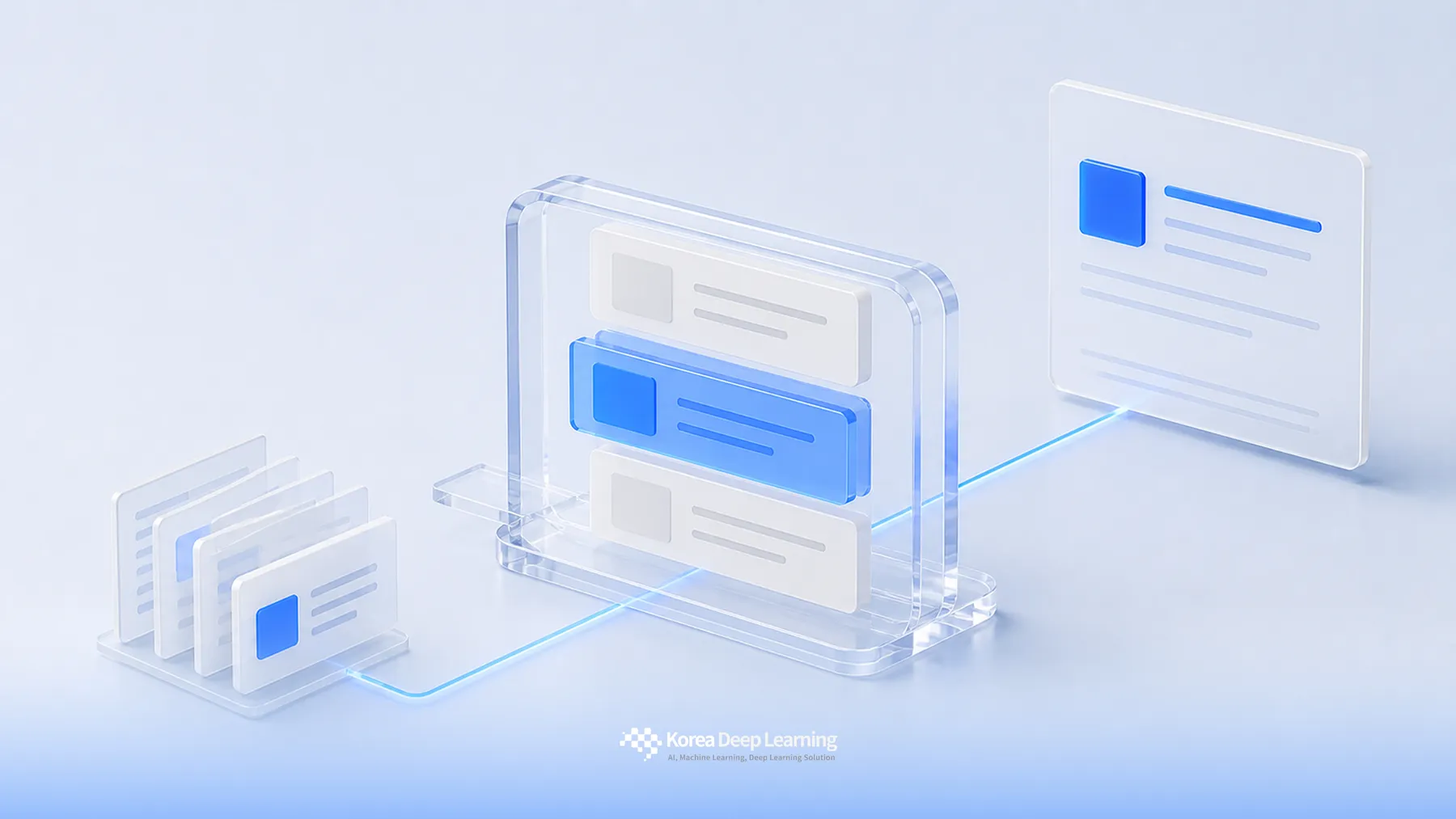
In an op-ed for ZDNet Korea on April 30, 2025, Korea Deep Learning pointed out the limits of large language models (LLMs) that read only text, and said the "VLM era" has arrived, in which vision-language models (VLMs) that understand images as well are changing document processing in industry. The op-ed observes that less than two years after LLMs appeared, industry's attention is shifting to VLMs.
LLMs cannot read scanned documents directly
The op-ed is clear about the limits of LLMs. LLMs cannot directly interpret visual information made of pixels. A scanned document must first be converted to text with optical character recognition (OCR) before an LLM can work with it.
VLMs close this gap. The op-ed compares a VLM to a "photo expert" and a "language expert" in one. Because it can both see images and interpret text, it can look at the surrounding context of an amount field with blurry characters and infer that "this field is probably the billed amount."
Results seen with 40,000 waybills a day and in insurance reviews
The op-ed explains the impact with two field cases. At logistics company L, which scans an average of 40,000 waybills a day, the OCR error rate climbed to 18% as the number of waybill formats passed 600. In the first month after it adopted VLM-based OCR, the error rate fell to 4%, and the review staff shrank from 15 people to four.
In an insurance claims adjustment workflow, the average review time per case fell by 4.7 minutes within three months of adopting VLM-based OCR, and the detection rate for improper claims rose 2.3 times.
Three challenges in adopting VLMs, and regulation
The op-ed names GPU costs, data security and integration with machine learning operations (MLOps) as the challenges to solve before bringing VLMs into real work. The regulatory environment is another variable. The op-ed also notes that the European Union's AI Act has begun to set rules on bias and privacy in image data.
Korea Deep Learning turned this direction into products, launching DEEP Agent in March 2025 and DEEP OCR+, a VLM-based OCR solution, on April 10, 2025.
The full op-ed appeared in ZDNet Korea.
About Korea Deep Learning
Korea Deep Learning (KDL), founded in 2019, is an enterprise AI agent company. Built on KDL Frontier, its own vision-language model (VLM) specialized for documents, KDL makes AI agents that take on and complete the document work of businesses and public institutions. Its main products are DEEP OCR, DEEP Parser, DEEP Agent and DEEP Ops.