


Op-ed
2025 New Year's message: advancing vision AI and helping B2B and B2G customers adopt custom AI
Korea Deep LearningPublished
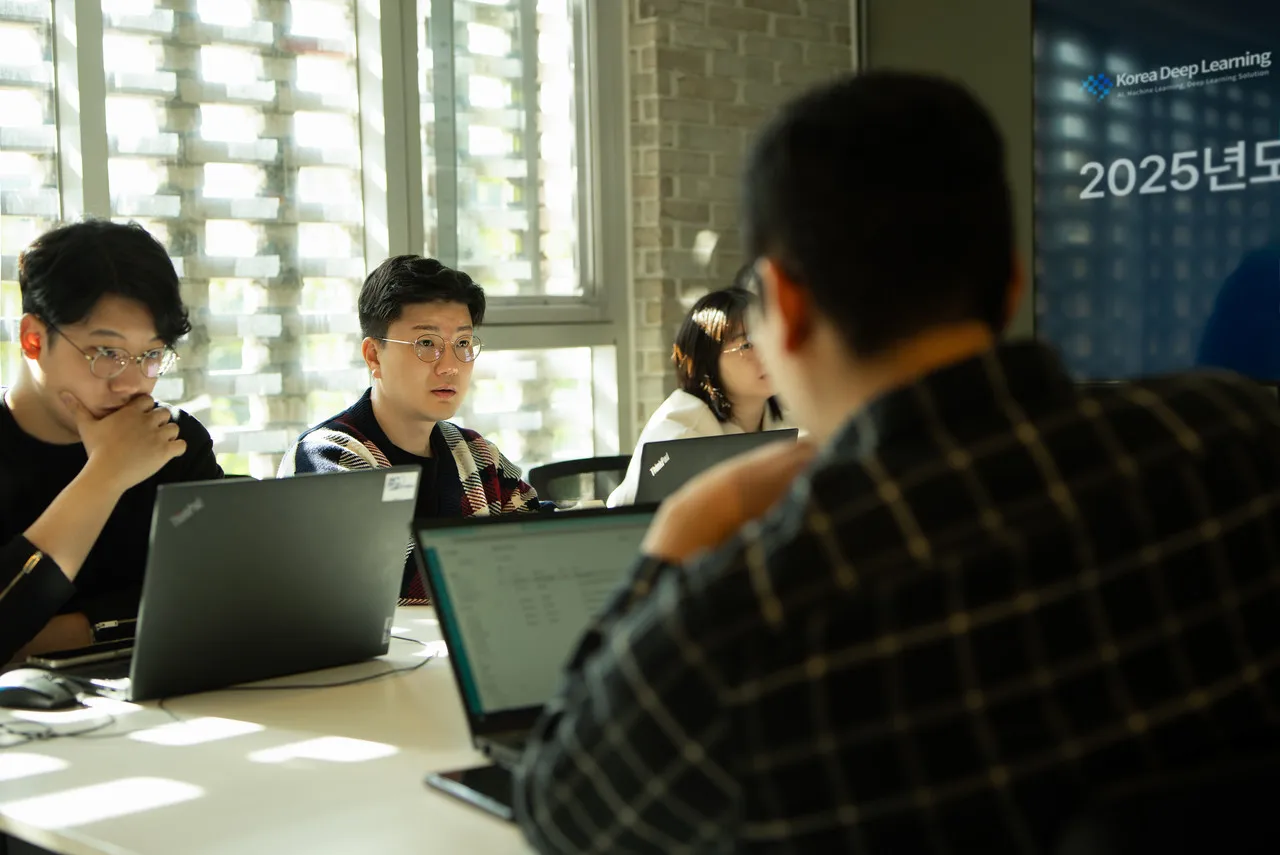
Korea Deep Learning, led by CEO Kim Ji-hyun, published its 2025 New Year's message in AI Times. Its goal for the year is to advance its vision AI technology and offer more custom AI solutions for B2B and B2G customers.
An AI market that has moved to commercialization
The message opens with a look at the market. Since last year, the AI industry has focused on commercialization and practical use, and solutions with the versatility and scalability of multimodal technology are leading the market. OCR and vision AI in particular see clear demand in manufacturing, logistics and public safety. In the B2B and B2G markets, the company sees demand for custom solutions built around each organization's needs growing faster than demand for general-purpose AI.
Korea Deep Learning named two foundations for growing its business: its experience supplying solutions to more than 80 customers, including major Korean public corporations, public institutions and large companies, and the video data it has built up.
First goal: leadership in the public sector and support for custom adoption
The first goal is to strengthen its leadership in the public market and help private companies adopt custom AI. Korea Deep Learning stressed that its "custom AI prebuilt pipeline" cuts the time companies take to adopt AI by more than 50% compared with the industry average. Because each customer's needs are met on top of a pipeline built in advance, it saves the time it would take to develop from scratch.
Second goal: advancing the technology into video
The second goal is to advance the technology. The company will go beyond text to make wider use of video data, and focus on developing real-time applied solutions with an MLOps-based "additional training system." The plan is to combine on-premises technology with MLOps to deliver solutions optimized for each company.
"This year, we will make our use of data more efficient and deliver solutions optimized for each company through MLOps and on-premises technology."
— Cheon Hyo-chang, Head of Technology Business, Korea Deep Learning
2024 achievements and financial goals
Looking back on last year, the message highlighted the development of "deep learning-based next-generation logistics data OCR digital transformation (DX) technology." The technology solves the problem of unsorted items in logistics invoice sorting and re-reads barcodes at very high speed when they are misread. The company also put a development and operations system in place, built on its own video-language model and AI prebuilt pipeline.
On the financial side, the company maintains an average net profit margin of 39%, a debt ratio of 13% and a credit rating of A or higher, and it set a target of KRW 1 billion in net profit for 2025.
"We have kept our financial indicators steady, with an average net profit margin of 39%, a debt ratio of 13% and a credit rating of A or higher, and this year we will achieve KRW 1 billion in net profit."
The full message was published in AI Times.
About Korea Deep Learning
Korea Deep Learning (KDL), founded in 2019, is an enterprise AI agent company. Built on KDL Frontier, its own vision-language model (VLM) specialized for documents, KDL makes AI agents that take on and complete the document work of businesses and public institutions. Its main products are DEEP OCR, DEEP Parser, DEEP Agent and DEEP Ops.